
Farm & Ranch Captive Insurance - Stabilize Costs, Keep The Profits
Captives built for agriculture. Finance predictable layers of risk across Workers’ Comp, Auto, and General Liability; gain claims transparency, share in underwriting profits, and reinvest in safety.
Risk Retention
Owning The Risk vs Renting It
When losses improve, members can receive returns of underwriting profit and investment income. Traditional plans pay those to the carrier.
- Feasibility analysis and peer-group fit assessment
- Best-in-class claims advocacy and safety coaching
- Transparent data, benchmarking, and dividend potential

Why Captive On The Farm
Purpose-built for farms, ranches, co-ops, dairies, and processors that invest in safety and want long-term cost control.

Steady Costs
We design insurance and risk management plans built specifically for your operation, not a generic template.
Add Your Own Farmer-Owned Insurance Company
We can help you set up a “micro-captive” so you keep control and more of the dollars you spend on insurance.
Keep Some Risk When It’s Worth It
We show you when it makes sense to insure less and keep certain risks yourself, saving money when the odds are on your side.
Designed to Make You Money
If your captive performs well, the profits stay with you — not some outside insurance carrier.
Tailored to Farmers & Ag
Designed around exposures like fleet, livestock, grain, chem/fertilizer, packing, and dairy.
Turn Self-Insurance Into a Long-Term Plan
Instead of just “crossing your fingers” and covering losses out of pocket, we help you turn that self-insured risk into a structured, tax-savvy insurance program.
Videos
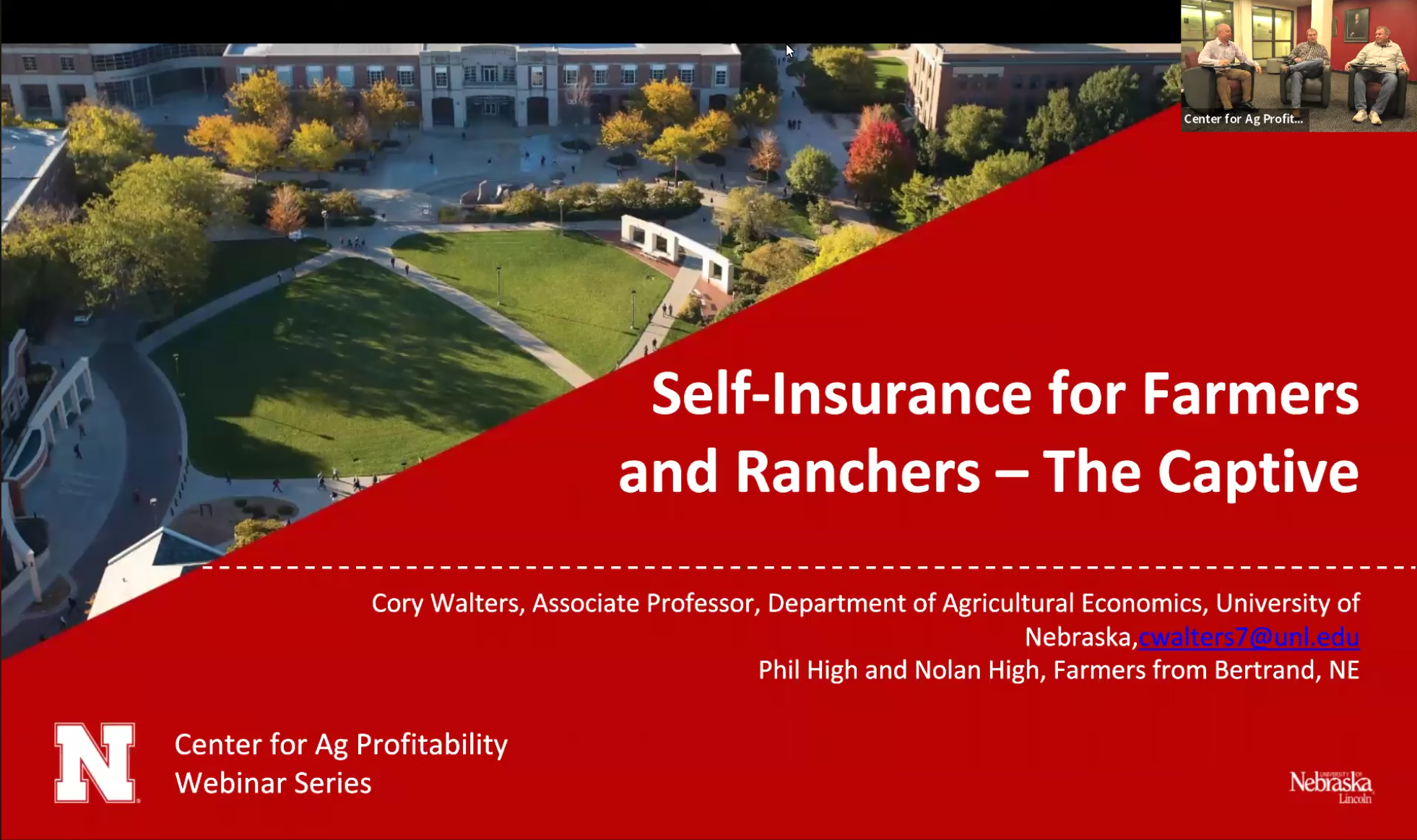
Dr. Cory Walters will host a webinar with Nebraska farmers Phil and Nolan High on how using an insurance captive helps them cut costs, gain flexibility, and manage farm risks.
House Committee on Agriculture discussing the FRAME Act.

Old Way vs New Way
Old Way: Traditional Insurance
- Year-to-year premium volatility in hard markets
- You can’t see (or question) claims reserves or data
- Profits flow to the carrier, not to your balance sheet
- Safety programs are cookie-cutter and generic
- No benchmark to measure yourself against others like you
New Way: Captive On The Farm
- Predictable costs by owning part of your own insurance
- Profits remain with the farm
- Full visibility into claims and numbers
- Captive reserves can be invested to generate additional returns
- Safety and training designed for agriculture
- Accountability and ideas from other successful farms in your group
- 831(b) election provides significant tax advantages
- Ability to adjust coverage terms and limits
Start My Assessment
How It Works
Assess Eligibility and Risks
We evaluate if your farm qualifies, typically for closely-held agribusinesses with at least $1M in pre-tax profits and insurable risks not fully covered by commercial insurance (e.g., crop failure from non-federal events, equipment breakdowns, or regulatory shifts). Conduct a self-audit: List uninsured exposures, review current premiums/deductibles, and gauge potential savings.
Underwriting
Submit WC/GL/Auto data; we model your layer, collateral, and reinsurance.
Setup Structure
Opt for an 831(b) micro-captive (taxed only on investment income, not underwriting profits up to the cap) as it's ideal for mid-sized farms. Captive On The Farm acts as the captive manager. We'll handle design: Custom policies for ag risks like loss of key suppliers or employment liabilities.
Fund & Launch
Approval takes 90+ days. Go live: Pay premiums (deductible as biz expenses), manage claims internally, and invest reserves wisely. Engage brokers/investment managers for seamless integration.
Operate & Improve
Post-launch, administer annually: File reports, renew licenses, and audit for IRS compliance (avoid "listed transactions" pitfalls via clean risk distribution). Track benefits like 20-50% cost reductions and profit from unused funds as dividends/loans back to your farm. For ag, proactively update for emerging risks like trade embargoes.
Self Insurance
Understanding its Importance and Necessity
Self-insurance is a critical concept that many individuals and businesses should grasp in today’s economic landscape. It refers to the practice of setting aside funds to cover potential losses rather than purchasing traditional insurance policies. This method allows you to manage risk more effectively by giving you control over your resources. Understanding the importance and necessity of self-insurance can empower individuals and organizations to make informed decisions about their financial futures.

Cost Savings
One of the foremost benefits of self-insurance is cost savings. By avoiding the premiums associated with conventional insurance, individuals and businesses can allocate those funds towards building a robust financial reserve. This practice not only provides a safety net for unforeseen events but also enables one to invest in their growth and development. Additionally, self-insurance allows for greater flexibility in managing claims, as resources can be deployed according to specific needs without the constraints imposed by insurance providers.
Risk Management
Furthermore, self-insuring encourages a more proactive approach to risk management. When individuals and businesses are directly accountable for their losses, they tend to evaluate their risks more critically, fostering the implementation of preventative measures. This shift in mindset can lead to safer practices, ultimately reducing the frequency and severity of incidents that necessitate a claim. In summary, understanding self-insurance is vital for anyone looking to fortify their financial standing while also promoting accountability and resourcefulness in risk management strategies.
Start My Assessment
Frequently Asked Questions
Captive insurance lets farmers create their own insurance company, often a micro-captive, to cover farm-specific risks that traditional policies overlook, like weather disruptions, equipment failures, or supply chain issues. It's essentially self-insurance formalized into a professional entity, integrating with commercial coverage for a hybrid safety net. In ag, it's a game-changer for turning unpredictable losses into controlled, profitable reserves.
Mid-market ag operations with strong safety practices and predictable losses. Typical lines bundled include WC, Auto, and GL.
Your farm pays 'premiums' (deductible as business expenses) to your own captive company, which builds tax-deferred funds for claims. If no losses occur, those funds grow as profit; if claims hit, you handle them internally for speed and flexibility. It fills gaps in standard farm insurance, like high deductibles or exclusions, while encouraging safer practices to cut incidents. Programs like Captive on the Farm customize this for ag, using 831(b) for tax advantages.
IRS Code Section 831(b), from 1986, lets small captives (micro-captives) elect to be taxed only on investment income, not underwriting profits up to the cap—ideal for farmers setting aside tax-deferred dollars for uninsured risks like lawsuits or data breaches. Sites like 831b.com administer these, while Captive on the Farm applies them specifically to ag for hybrid self-insurance plans.
The group spreads risk across members and reinsurance responds above the captive layer. Long-term, performance and safety improvements matter most.
If underwriting results and investments outperform the plan after paid and IBNR losses, surplus may be distributed to members per the captive’s rules.
Captive insurance is essentially self-insurance on steroids, where your farm creates and owns a licensed entity to retain and manage risks internally. For agriculture, You self-fund gaps in crop, property, or liability coverage, but with formal structure for tax benefits and compliance.
Yes—captives are unbundled. You can use best-in-class claims, loss control, and actuarial partners aligned to your goals.
After feasibility and underwriting, many groups can onboard at renewal. Allow time for capitalization and collateral arrangements.